unremarked God
City of GodThe unremarked God names a form of divinity that is neither the commanding God of institutional authority nor a purely absent God, but the God of history: intermittently visible in human creation, moral uncertainty, scientific wonder, and the ordinary world. The concept gives religious significance to a modern city and a material universe while refusing to turn that significance into proof, consolation, or license for violence.
Definition and Theological Position
The phrase appears as a cluster of related names: the unremarked God, the sometime-thing God, and the God of history. Its defining quality is partial visibility. This God is not presented as continuously intervening in events or as plainly answering petitioners. Instead, divinity appears as something historically accumulated and easily overlooked, a presence that may be discerned in what human beings build, preserve, question, or make possible. The wording therefore holds revelation and uncertainty together: God may be active in the world, but the world does not offer an unambiguous divine signature.
The concept stands against the reduction of faith to authority. Thomas Pemberton asks whether believers are merely choosing Jesus as an aesthetic preference when different traditions all claim access to salvation, and whether God is ultimately a story human beings tell about Him. The question is not simply whether religion is true, but whether any tradition can contain its object. The unremarked God answers by refusing containment. Divinity remains larger than ritual habits, institutional claims, and the consolations of belonging, while still being sought within the forms of human life.
The City as Historical Creation
The clearest formulation comes through the image of New York City. Seen from above at night, the modern city becomes a jeweled wonder floating in darkness: a consolidated creation assembled from the intentions and labor of generations. It is intelligent, accomplished, sophisticated, and beautiful, yet also breakable. The city’s splendor is not attributed straightforwardly to divine intervention. Instead, its historical construction raises the question of how much God had to do with the communal achievement of human beings.
That uncertainty is essential. The city is called the work of the unremarked God because its divinity is embedded in accumulated institutions, cooperation, memory, and creativity rather than announced by miracle. The God of history is therefore present as a sometime-thing: a force or meaning that becomes perceptible in particular formations and then recedes from notice. The city’s brilliance does not prove providence; its fragility does not disprove it. Both are aspects of the same historical object.
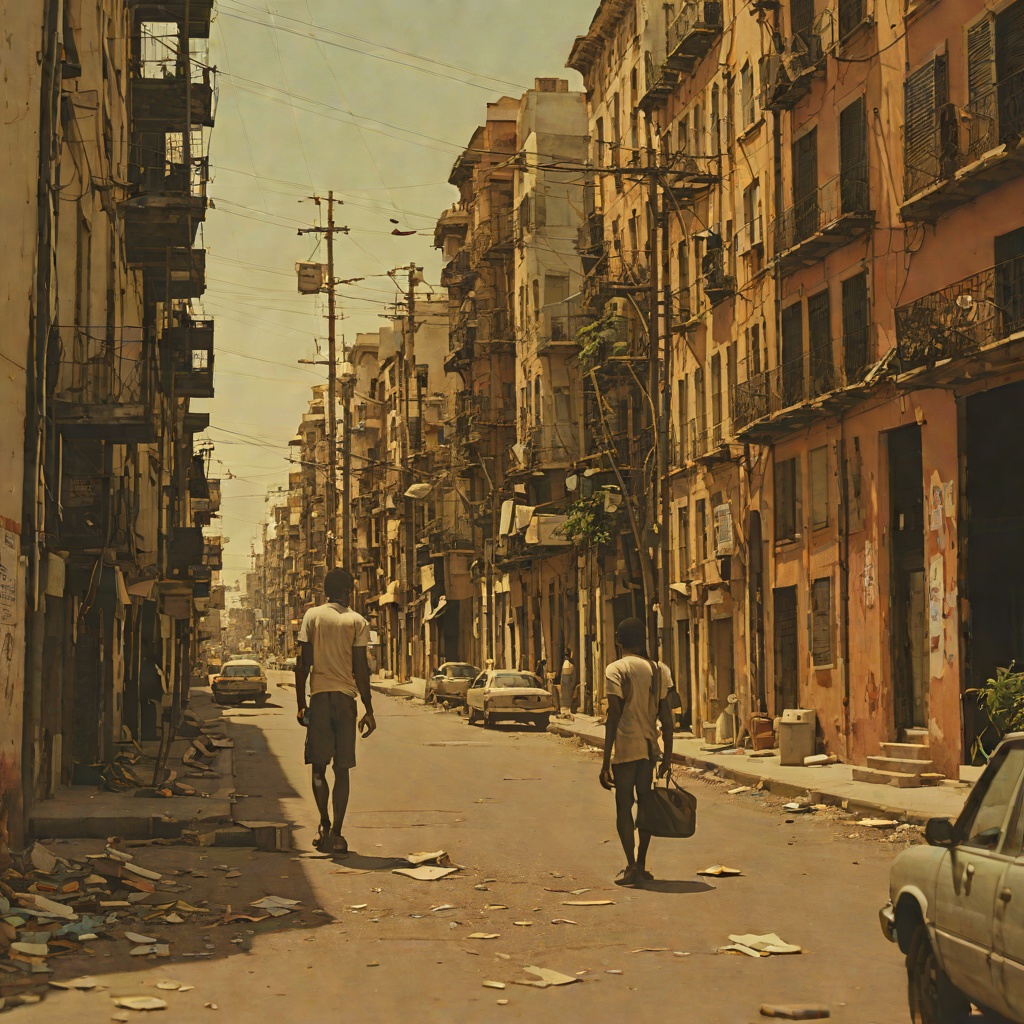
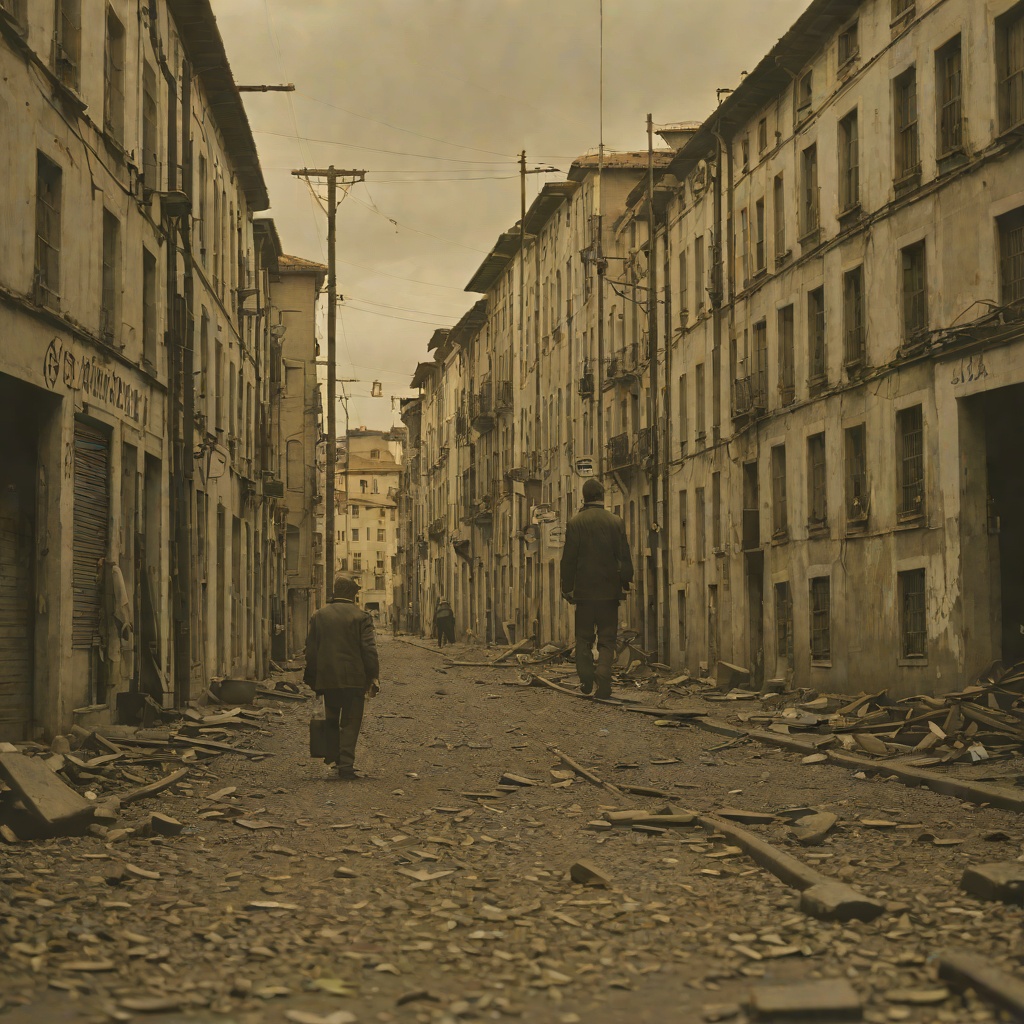
The concept also governs the city’s possible collapse. As more people enter it, the city exceeds its capacity for self-containment. Its economy fails to employ, house, and feed the crowds; smog and rising temperatures bring heat waves, droughts, hurricanes, and monumental snowfalls; power blackouts multiply, water arrives contaminated, inflation makes money useless, and class distinctions blur as the city expands. Religious prophets then interpret the crisis as divine wrath, while impoverished, God-soaked mobs are massacred and the military takes power. The return of the unremarked God in this sequence is politically dangerous: a previously neglected religious force is resurrected as fury and becomes available to prophets, politicians, mobs, and armies.
Cosmology and the Limits of Explanation
The unremarked God is also compatible with a scientific imagination that treats the universe as astonishing without converting astonishment into doctrine. The account of the Big Bang describes space itself as expanding from a singular point, carrying gas, matter, darkness, and light with it rather than exploding into an already available container. The universe becomes a vast flowering of space-time, followed by the evolution of stars, elemental dust, nebulae, and galaxies moving away from one another across roughly fifteen billion years.
This cosmology produces a theological problem rather than solving one. If space is a property of the universe and expanded with everything inside it, the question of what lies beyond or beneath that expansion cannot be answered by ordinary spatial language. The mystery is not a gap that traditional theology can simply occupy. It is an encounter with the limits of concepts themselves, where scientific description and religious speculation meet without merging.
The neutrino meditation extends the same pattern. Neutrinos pass effortlessly through the diameter of the Earth, and physicists construct enormous tanks of heavy water deep inside mountains, under the Aegean Sea, beneath Lake Baikal, in tunnels under the Alps, and below Antarctic ice to detect the minuscule voltage produced by their passage. Such particles become emblems of an unseen reality inferred through effects too small for ordinary perception. The analogy is suggestive but not conclusive: the unremarked God, like the neutrino, would be known indirectly, if at all, through traces rather than appearance.
A related argument rejects the idea that consciousness and the universe could have arisen through mere accidental self-generation as more absurd than the idea of a Creator. Yet the alternative is not a return to a personal deity who supervises every event. Einstein’s name for God, the Old One, is treated as precise because God is ancient, unduplicated, all-encompassing, and without gender. Physics may be imagined as tracking God through gravity and the nuclear forces, but this remains only a beginning, not a complete account of the God to whom people pray. The unremarked God occupies precisely this interval between intelligibility and excess.
Doubt, Ethics, and Religious Power
The concept is inseparable from the book’s suspicion of religious certainty. Faith can reduce people to beggarly submission wherever a tradition claims God’s authority, and the existence of multiple competing truth claims makes it difficult to distinguish genuine revelation from cherished story. Against this background, doubt becomes more than intellectual hesitation. It can restrain the impulse to declare others false, profane, or disposable.
Sarah Blumenthal argues that doubt has been a great civilizing force in the twentieth century. The flexible condition of theological uncertainty, balancing the wish to believe against skepticism, grief, and anxiety, can hold people to ethical behavior. By contrast, true believers of religious or religious-statist kinds have carried out murder. The impulse to excommunicate, satanize, eradicate, and ethnically cleanse is described as religious because it transforms conviction into permission to destroy.
This does not make every uncertain person virtuous, nor does it abolish religion. Sarah places her trust in religious professionals who treat scripture as symbolic comfort rather than as a set of historic guarantees, and in readers willing to suspend disbelief while acknowledging that their faith is compromised. The unremarked God thus survives most convincingly as an ethical pressure within uncertainty: not a supernatural warrant for domination, but a reason to resist the human demand for final possession of truth.
The same tension appears in the historical record of mass violence. The destruction of tens of millions through enslavement, war, genocide, and other forms of organized cruelty makes resurrection impossible for countless victims even within the imagination of Christian faith. The history of atrocity brings God into disrepute and raises the suspicion that God is part of the problem, since people can invoke God for almost any murderous purpose and God seems not to resist. The unremarked God cannot be separated from this indictment. A divinity present in history is also implicated in the history that believers use to accuse, justify, and kill.
Ordinary Practice and Narrative Significance
The concept remains connected to small, material practices rather than only to cosmic scale. Pemberton recognizes God not merely in clerical clothing, rectory walls, chapel stone, or the Anglican starch of his collar, but in the blinking cursor on the screen. The cursor turns writing into a site of theological surveillance and self-examination: the God who watches is located inside the act by which a person tries to describe Him. Even the detective novels Pemberton reads while depressed become part of this contrast, offering a world whose punishments are circumscribed and dependable in a way God’s world is not.
The unremarked God also permits religious identity to remain unsettled. Pemberton, while studying to become Jewish, says that he has never felt so completely Christian. His conversion does not produce a clean transfer from one system to another; it exposes continuities beneath institutional boundaries. The sacred persists through transformation, irony, and contradiction rather than through a final doctrinal settlement.
In this sense, the concept gives the novel a middle position between secular disdain and religious certainty. Its universe is scientifically immense, its city historically made, and its moral life damaged by the political uses of God. Yet birds, women, language, consciousness, human inventiveness, and the difficult choice to remain ethically uncertain can still gladden the heart. The unremarked God is the name for that residual, non-coercive sacredness: a God not loudly enthroned above history, but intermittently legible within the world people make and the doubts that prevent them from claiming it completely.